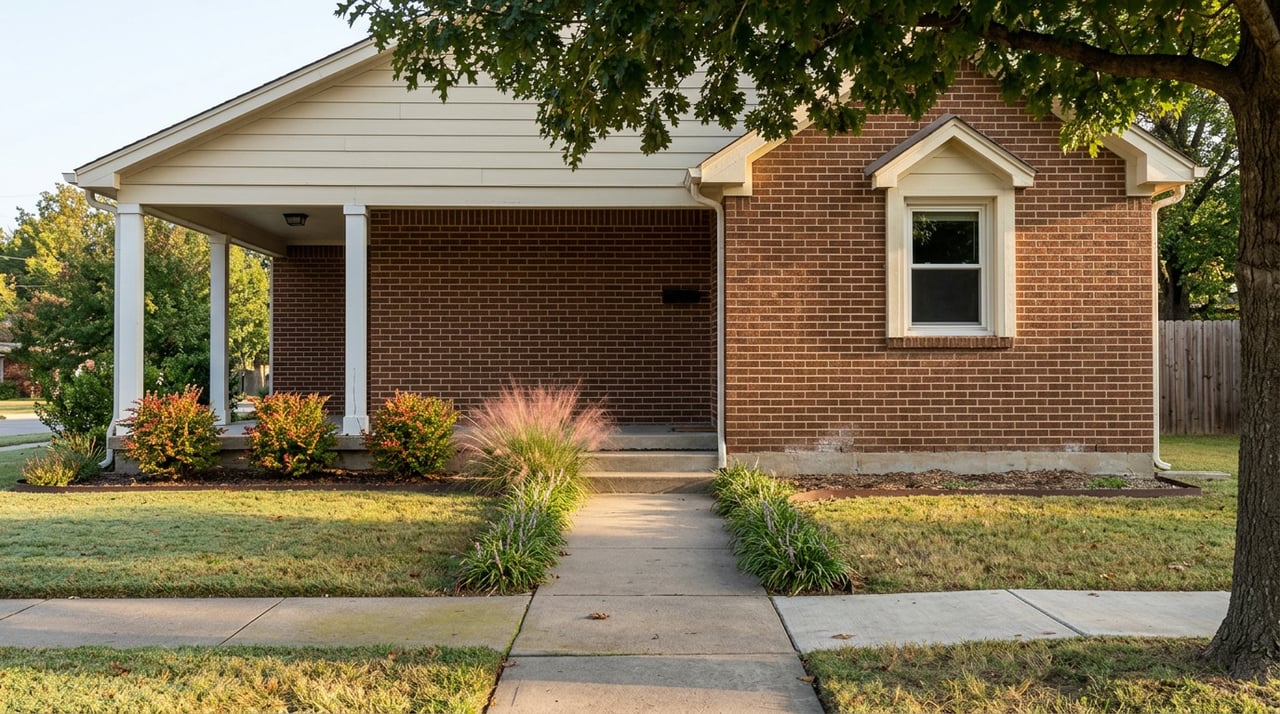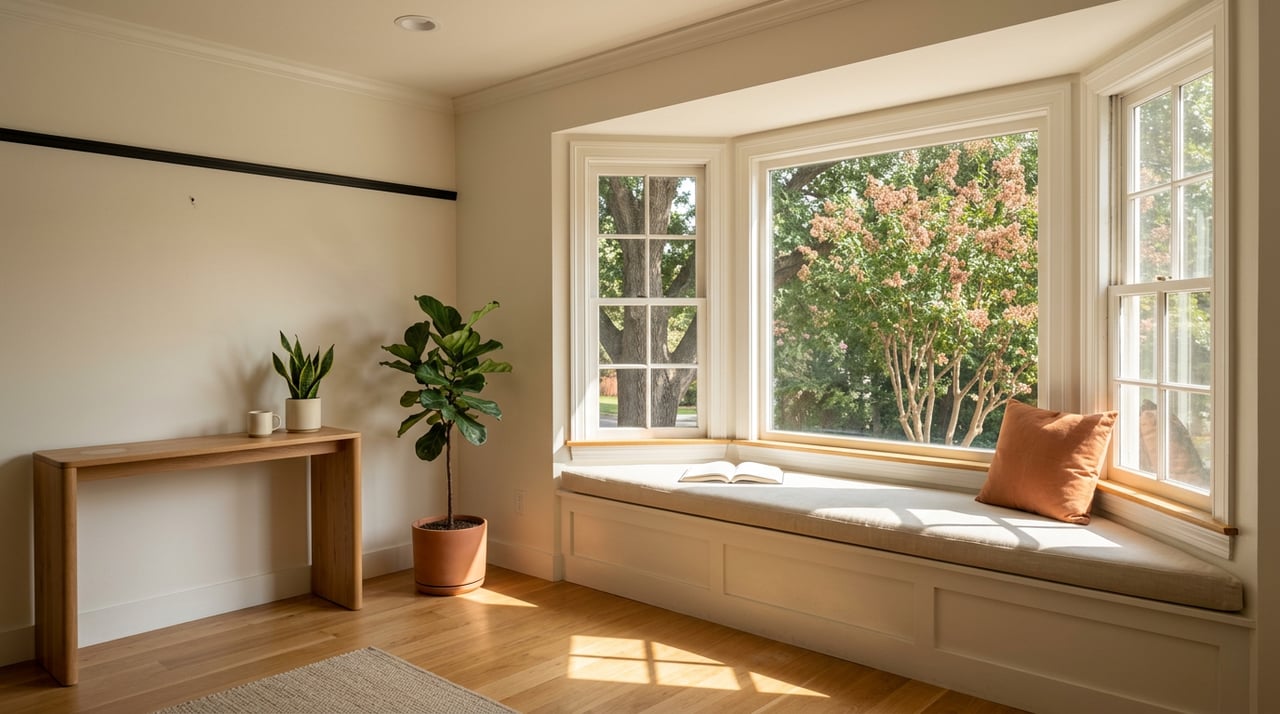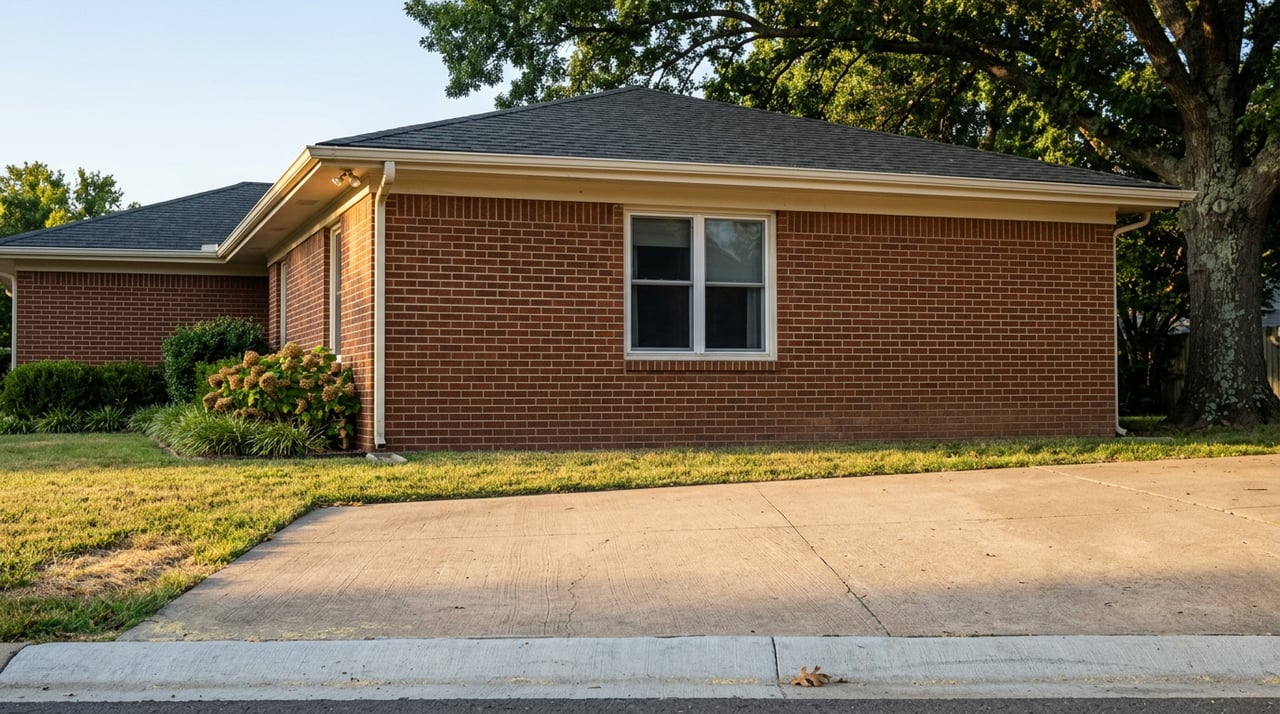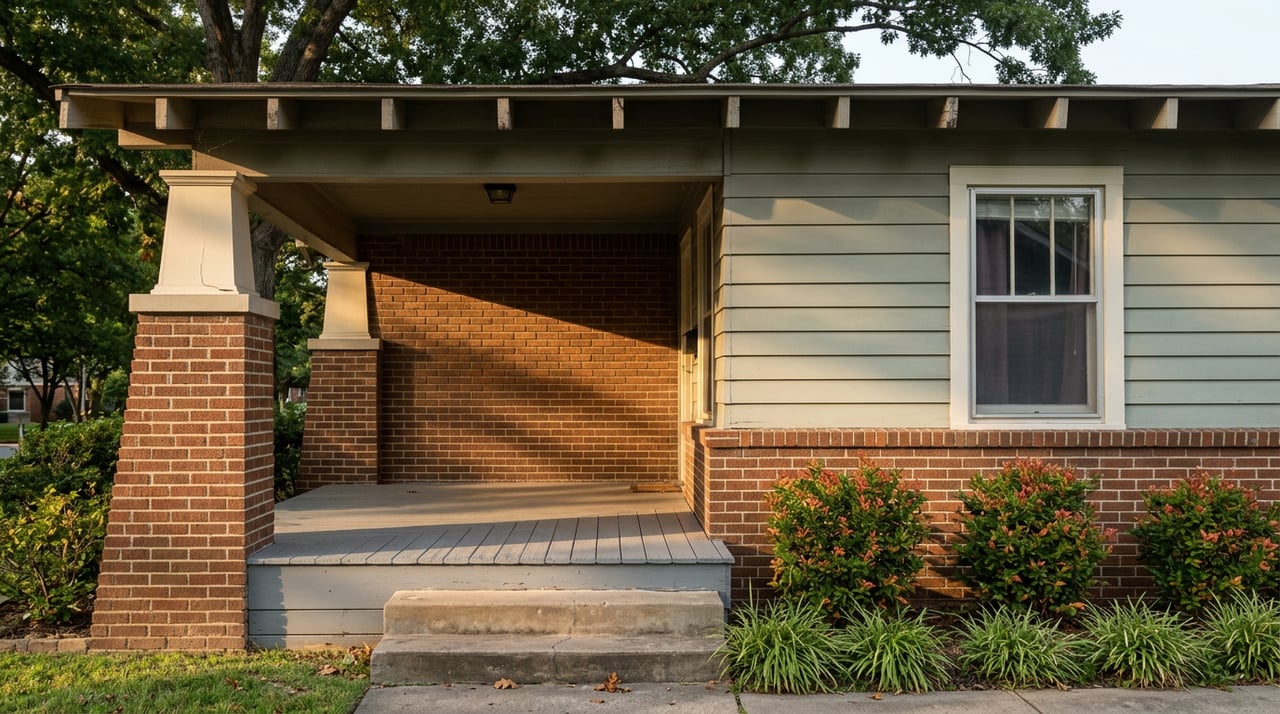
Two recent listings on Chautauqua Avenue tell the same quiet story underneath the photos. One highlights a hail-resistant roof installed in 2021 alongside original wood floors and historic details throughout. Another highlights a new roof, two tankless water heaters, and fresh pipe insulation added under the house. Both sellers updated what sits behind the walls. Neither touched what the street sees.
That is not a coincidence, and it is not entirely a design choice either. It is what happens when a hundred-year-old house sits inside a preservation ordinance. The systems behind the walls age on one clock. Everything visible from the sidewalk runs on a different clock, set by a city commission that meets once a month. Buyers who fall for a bungalow in Chautauqua or Miller tend to plan around the first clock and never hear about the second until they are standing in front of a permit application, wondering why the timeline just doubled.
The Ordinance That Slows Down the Exterior
Norman designated Chautauqua as its first historic district in 1995. Miller sits inside the Classen-Miller Addition, platted back in 1903 and built out mostly between 1910 and 1938 as the university drew deans, faculty, and business leaders to the blocks near campus. A third district, Southridge, came later, established in 2016 and expanded in 2018. All three fall under the city's Historic District Ordinance, adopted in 1993, and all three answer to the Norman Historic District Commission.
Buy a house in one of these districts and the interior is entirely yours to work with. The exterior is a different matter. Any change visible from the street, a new roofline, replacement windows, an addition, a fence, requires a Certificate of Appropriateness from the Commission before the city will issue a building permit. The Historic District Commission meets the first Monday of every month, and the filing deadline lands 24 days before that meeting. Applications run $75 and need photos of the property, a copy of the deed, a site plan, and building plans.
Miss the filing window and the project does not wait a few days. It waits a full month.
That is the second clock. It does not care about your closing date or your contractor's schedule, and it explains why so many Chautauqua and Miller houses show recent plumbing and mechanical work paired with original windows and unchanged rooflines. Updating what is invisible from the street is fast. Updating what is visible requires a meeting.
Three Districts, Three Different Footprints
| District | Established | Era of homes | Footprint |
|---|---|---|---|
| Chautauqua | 1995 | Mostly 1915 to 1935, majority in the 1920s | About 153 residential structures across six blocks, roughly Symmes Street to Brooks Street, Chautauqua Avenue to Lahoma Avenue |
| Miller | Platted 1903 as part of the Classen-Miller Addition | 1910 to 1938, Craftsman bungalow style predominates | Near downtown and the university, developed as a faculty and business-leader neighborhood after World War I |
| Southridge | 2016, expanded 2018 | Later construction than the other two districts | Bounded on the north by Macy Street |
The takeaway from that table is not the dates. It is the word "about." Chautauqua has roughly 153 houses total. That is not a subdivision that turns over dozens of listings a year. It is a pool small enough that any single closing carries outsized weight on what the next appraisal looks like.
The Physical Clock Inside the Walls
Homes built in Chautauqua and Miller between 1910 and 1938 predate modern electrical and plumbing codes by decades. Inspectors working this side of town routinely flag knob-and-tube wiring in homes from before 1950, aging galvanized steel supply lines that corrode from the inside out, and clay sewer laterals original to the property. Norman's soil profile compounds the plumbing story. The red clay common across the city expands and contracts with moisture swings, which is why grading, drainage, and foundation cracks get a close look on almost every local inspection, historic district or not.
None of this is cheap to fix once it shows up on a report. A full rewire on a house this age commonly runs in the thousands, sometimes reaching well into five figures once you count the drywall repair that follows opening up walls to fish new wire. A full repipe runs in a comparable range. Insurers have gotten more particular about it too. Homes with active knob-and-tube wiring, or an aging Federal Pacific or Zinsco panel, can be harder to insure until the system is brought current, and some carriers will not write a policy at all until the panel is replaced.
Here is what that means walking into an inspection on a Chautauqua or Miller listing:
- Pipe material gets checked first. Galvanized steel or original clay sewer lines are common finds in this housing stock and both are viewed less favorably than copper or PEX.
- Panel brand matters as much as panel age. A 60 or 100 amp panel is a capacity conversation. A Federal Pacific or Zinsco panel is a safety conversation.
- Sewer scope findings carry more weight here than in newer subdivisions, given how many original clay laterals are still in the ground under these blocks.
- Foundation grading and interior trim get extra attention because of how the local clay soil moves with the seasons.
Why the District's Small Size Changes Your Leverage
Norman's citywide numbers give useful context, but they are not the whole story once you are looking at a house on Chautauqua Avenue specifically. As of July 2026, the median sold price across Norman over the trailing six months sat at $284,450, with the middle half of sales closing between $210,000 and $394,899. Homes currently listed were asking a median of $430,000, a gap that mostly reflects what happens to be sitting on the market right now rather than a discount waiting to be claimed. The pending-to-active ratio ran about 0.64, the profile of a market that currently favors sellers.
Layer a 153-house historic district on top of that and the comp problem gets sharper, not softer. With so few arm's-length sales closing inside Chautauqua or Miller in any given year, appraisers and negotiating buyers have less to lean on when it comes to a tight run of recent, truly comparable closings. That pushes more of the weight onto documented condition: what systems have actually been replaced, whether any exterior work already has a Certificate of Appropriateness on file, and what permits exist on record with the city. Two houses that look similar in photos can carry very different real costs once you know which one already solved its plumbing problem and which one is still running on galvanized pipe from the 1930s.
Price range across these districts reflects that spread. Listings have closed anywhere from around $200,000 to the high $600,000s depending on size, lot, and how much of that physical clock has already been addressed. That is a wider spread than the citywide middle-half range, which tells you condition and documentation matter more here than they do in a typical Norman subdivision.
The Two-Checklist Approach Before You Write an Offer
Before writing an offer on a Chautauqua, Miller, or Southridge listing, it helps to run two separate checklists rather than one.
The physical checklist asks when the panel, supply lines, sewer lateral, and roof were last replaced, and whether permits exist on file with the city for that work. The regulatory checklist asks what the seller has already gotten approved through the Historic District Commission, and whether anything you are picturing, a garage conversion, an added dormer, a new fence line, would need a Certificate of Appropriateness before a contractor could touch it. Skipping either checklist tends to surface the gap at the worst possible moment, mid-renovation, with a filing deadline already 24 days behind you.
Does an interior renovation need Commission approval? No. Review covers only what is visible from the exterior: additions, roof changes, window replacements, fencing, and similar work. Kitchens, baths, and mechanical systems inside the house fall outside the Commission's scope.
How long does a Certificate of Appropriateness actually take? Plan around the meeting calendar rather than a business-day estimate. The Commission meets the first Monday of each month, with applications due 24 days ahead of that meeting. File after the deadline and the project waits a full cycle.
Will insurance or financing be harder to get in a house this old? It depends on what is actually running through the walls rather than the age on the deed. Knob-and-tube wiring or an aging Federal Pacific or Zinsco panel can complicate insurance until the system is updated. Ask for permit records on any electrical or plumbing work before assuming the systems are current.
Are Chautauqua and Miller more affordable than the rest of Norman? Not consistently. Recent closings in these districts have ranged from around $200,000 to the high $600,000s, a wider spread than the roughly $210,000 to $395,000 range covering the middle half of Norman's citywide sales over the past six months. Size, condition, and how much of the physical clock has already been addressed drive that spread more than location alone.
A house in one of these districts can be exactly the character home a buyer pictured on the first drive down the street. It is also two separate projects layered on top of each other, one running on the age of copper and wire, the other running on a monthly meeting calendar. Knowing which clock you are managing, before the offer goes in, is what keeps the renovation you planned from turning into the one you are still waiting on approval for.
If you are weighing a house in Chautauqua, Miller, or Southridge and want a straight read on what a specific property's systems and approval history actually look like, Oak & Prairie Real Estate works these blocks directly with Norman's broker-led team. Talk with a local broker and start your neighborhood market consult before you write the offer, not after the inspection report lands.